

Why Banks and Financial Services Brands Are Turning to Airports
January 20, 2026 · 5 min read
by Zayd Rahman
Airports have become one of the most strategically valuable environments for financial services marketing. Once dominated by luxury retail and travel brands, terminals are now home to major banks, card issuers and fintech platforms that see aviation hubs as essential to their global growth strategies.
This shift is not limited to a single region or brand. From the Gulf to Europe and Asia, financial institutions are making consistent, visible investments in airport media to reach audiences defined by mobility, affluence and international outlook. The result is a clear pattern that positions airports as a preferred channel for credibility driven brand building within the sector.
Airports as a Natural Environment for Financial Decision Makers
The financial services sector relies heavily on trust, scale and long term reputation. Airports deliver all three. Business travellers, entrepreneurs, expatriates and high net worth individuals move through terminals in concentrated volumes, often with time to engage and a mindset focused on planning, spending and cross border activity.
For banks and fintech platforms, this creates a rare opportunity to speak to globally active customers in a setting that already signals security, professionalism and international reach. Unlike digital platforms that fragment attention, airports provide sustained exposure in a controlled premium environment.
HSBC and the Power of Global Consistency
HSBC has long recognised the value of airports as a brand stage. Its continued presence on sky bridges and high traffic terminal zones across major international hubs reflects a commitment to visibility that matches its international banking proposition.
Rather than short term bursts, HSBC’s approach has been about consistency. Repeated exposure in airports reinforces familiarity among travellers who may encounter the brand multiple times across different countries. For a bank built around cross border finance, trade and mobility, airport advertising aligns seamlessly with its audience reality.
The focus is on reinforcing brand authority while travellers are already engaged with international journeys and decisions.
Standard Chartered and the GCC as a Financial Gateway
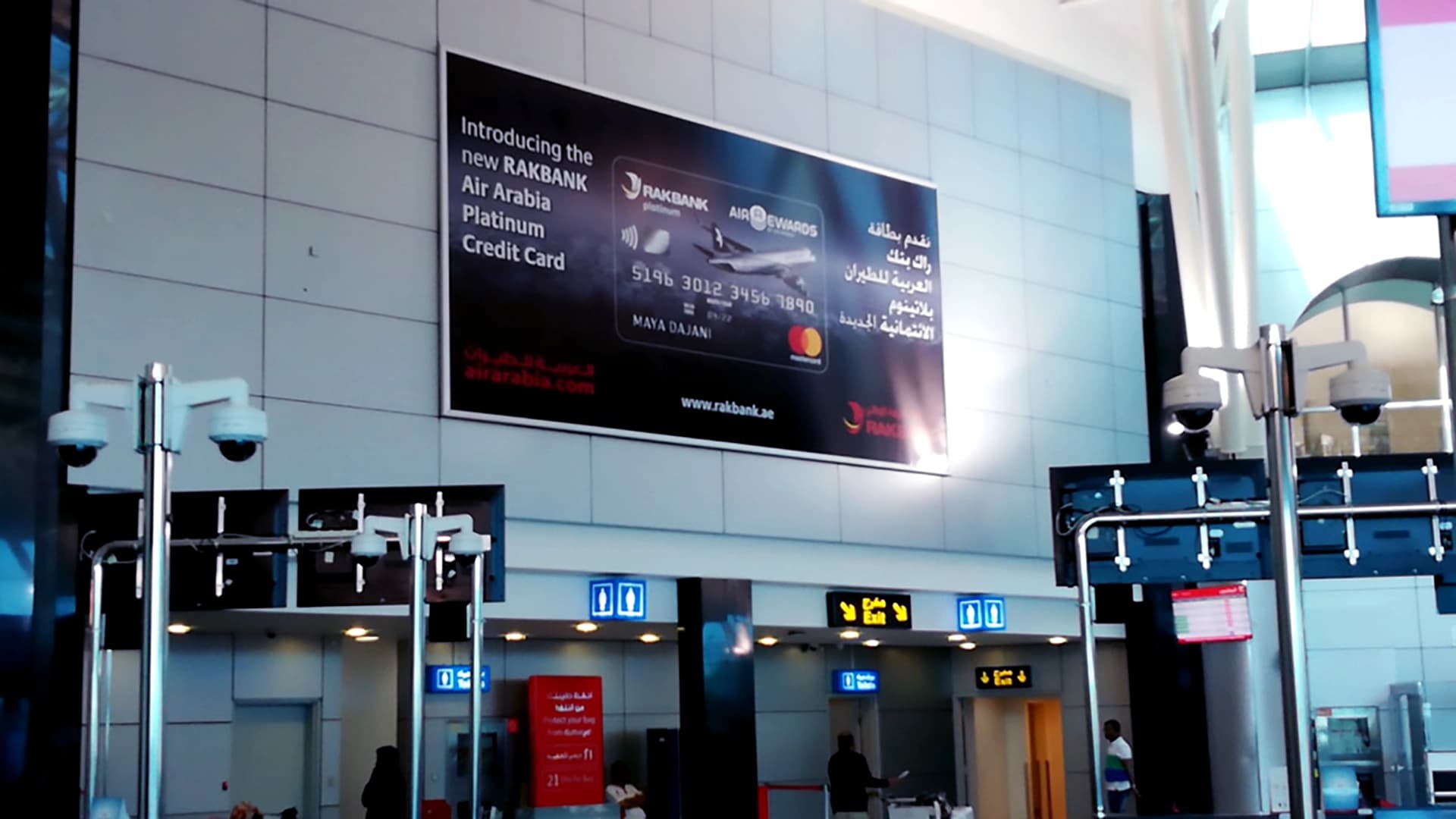
Standard Chartered offers a strong example of how airports support financial brands operating across emerging and established markets. With deep roots in Asia, Africa and the Middle East, the bank’s airport advertising activity reflects its focus on trade corridors and internationally connected clients.
In the Gulf, airports function as financial gateways rather than endpoints. Advertising in these environments allows Standard Chartered to speak directly to business leaders, investors and professionals who operate across multiple regions. The message is clear without being overt. This is a bank present wherever global commerce flows.
For financial brands with similar geographic breadth, airports provide a physical representation of international relevance.
Emirates NBD and Regional Leadership on Display
Emirates NBD demonstrates that airport advertising is not only for multinational entrants. Regional leaders also use aviation hubs to reinforce market position and brand stature.
As one of the Middle East’s largest banking groups, Emirates NBD’s visibility in UAE airports speaks to confidence and scale. These environments allow the brand to reach residents, expatriates and inbound visitors simultaneously, positioning the bank as a cornerstone of the region’s financial ecosystem.
For local institutions with global ambitions, airports offer a way to project leadership without needing to leave their home market.
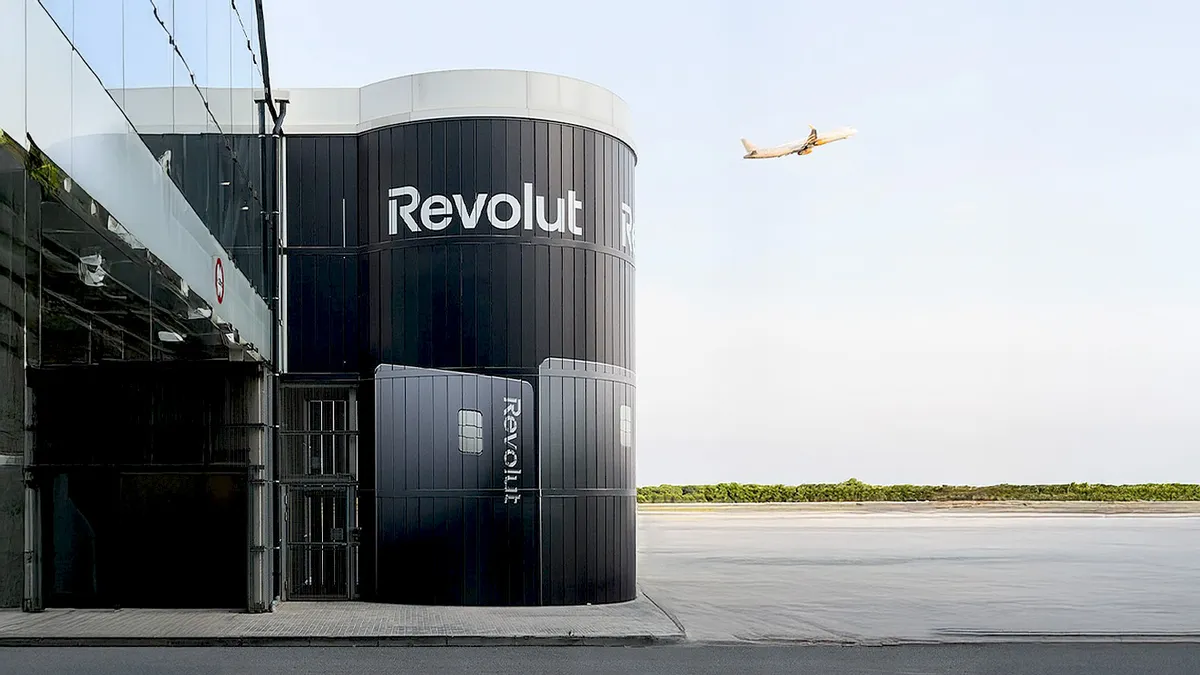
Revolut and the Role of Physical Media for Digital Brands
Revolut represents a different side of the financial services landscape, yet its presence in airports highlights a shared logic. Despite being app based, Revolut has invested in large format airport placements across major European travel hubs.
For fintech brands, airports help bridge the trust gap that can exist with purely digital platforms. Seeing a digital financial brand represented at scale in a premium physical environment adds legitimacy and reassurance. It also allows fintechs to reach travellers at moments when foreign exchange, payments and international spending are immediately relevant.
This reinforces that airport advertising remains effective even as financial services become increasingly digital.
American Express and the Travel Led Financial Ecosystem
American Express has long been associated with premium travel experiences. Its alignment with airports feels natural rather than forced.
By advertising in terminals and near lounges, American Express places itself at the intersection of travel, lifestyle and spending. The audience is already primed for financial engagement, whether through business travel, leisure upgrades or international transactions.
This strategy underlines how airports support brands that operate across finance, hospitality and consumer experience, all within a single journey.
Why the Sector Keeps Returning to Airports
Across these brands, several common drivers emerge.
Airports deliver access to audiences with higher lifetime value. They provide brand safe environments that support trust based messaging. They also allow financial services companies to communicate scale and stability in ways that digital formats struggle to replicate.
Importantly, airports operate as global networks. A campaign launched in one hub can be mirrored across multiple regions, creating continuity that supports international brand narratives.
For banks and fintechs alike, this combination continues to justify long term investment.
What This Means for Airport Advertising in the Gulf
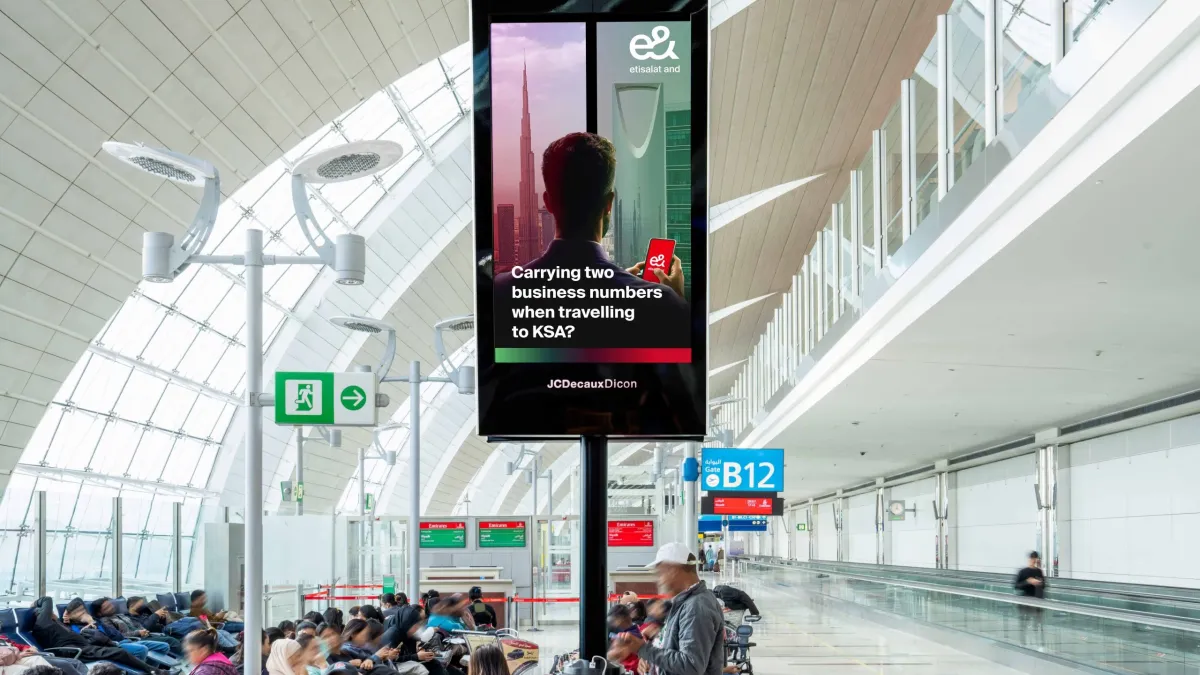
The Gulf sits at the centre of this trend. With some of the world’s busiest and most internationally connected airports, the region offers unmatched exposure to globally mobile financial audiences.
As more financial services brands look to scale across borders, airports in the Gulf will remain a focal point for campaigns that prioritise reputation, reach and relevance over short term metrics.
FAQs
Why do banks advertise in airports
Airports allow banks to reach affluent, internationally mobile audiences in trusted premium environments that reinforce brand credibility.
Are airports effective for fintech brands
Yes. Physical airport advertising helps digital financial brands build trust and reach users when international spending and payments are top of mind.
Why is the Gulf important for financial services advertising
Gulf airports connect global trade, finance and travel flows, making them ideal for reaching cross border financial audiences.
Do airport campaigns focus on awareness or conversion
Most financial services brands use airports for long term brand building and reputation rather than immediate transactional outcomes.
by Zayd Rahman
Share this article:
Enter your details and receive our free Media Kit.

Latest Industry news

Advertising Formats
August 13, 2026 · 4 min read
by Khuzaima Yamman
How Storytelling Makes Airport Advertising More EffectiveLearn how brands can use storytelling to create memorable airport advertising campaigns through emotion, strong visuals, local relevance, and clear messaging.
Tourism
August 10, 2026 · 5 min read
by Khuzaima Yamman
How Tourism Brands Use Airport Advertising to Attract TravellersDiscover how tourism brands use airport advertising to reach travellers, inspire visits, promote experiences and attract tourists across the UAE.

Advertising Formats
July 30, 2026 · 3 min read
by Khuzaima Yamman
The Role of Airport Advertising in Global Brand CampaignsDiscover the role of airport advertising in global brand campaigns, from reaching international audiences to improving awareness, credibility, and engagement.
Trusted by brands that soar high
Unrivalled exposure across the Gulf and beyond



Ready to let your business soar?
Complete your boarding card and let us take your company to the skies.
Gulf Airport Advertising

Elevate your brand with impossible to miss airport advertising.
12 international airports
284M+ annual passengers
42,000+ media touchpoints